got questions


Custom Block Brushes

Click on the image below for product information and to Buy Online:
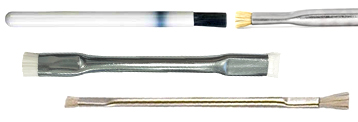
Fine-Filament Scrubbing Brushes
Custom Block Brushes
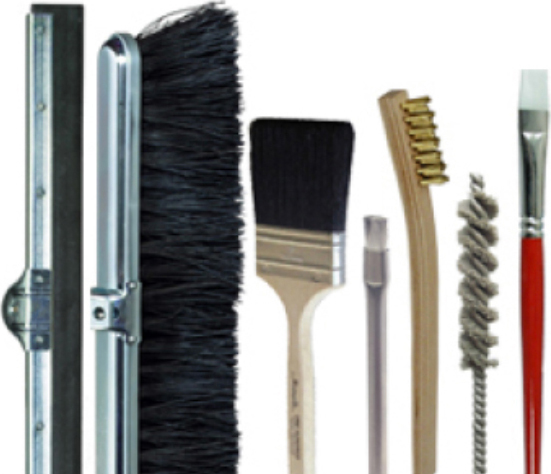
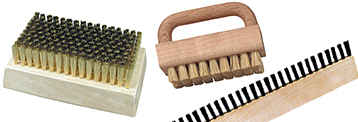
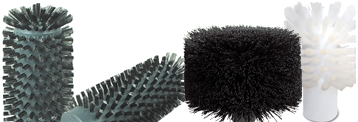
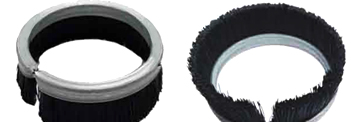
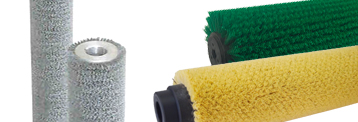
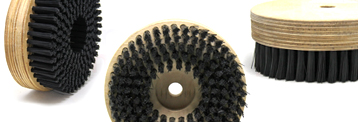
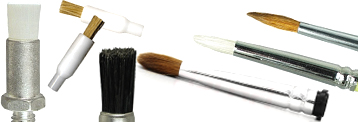
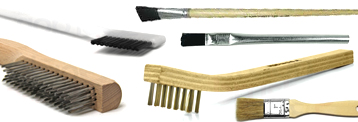
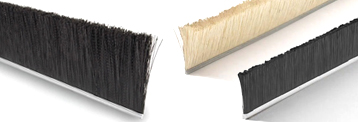
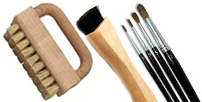
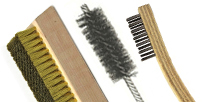
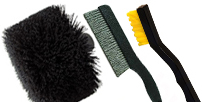
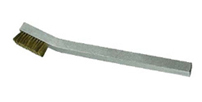
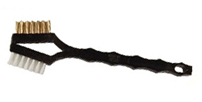
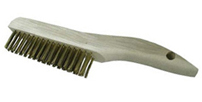
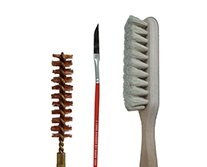
Block brushes encompass any type of brush bristle inserted into any type of block. Brush bristle may be stiff or soft, large or fine. Blocks may be made of plastic, metal or wood. Some examples of Block brushes are shown in the picture. Common names for these types of brushes include push brooms and scrub brushes. The uses for such a brush are truly endless. We at Gordon Brush can work with any block or bristle material listed in the "Materials" section to make the brush that suits your application.

Block brushes, often what people think of as standard brushes, are brushes made from a block of backing material with bristles inserted into it. The design of the block can vary significantly, from hand held, like a toothbrush to a push broom to a circular brush used by street sweeping machines. The concept of each brush is the same. A brush block, or back, is manufactured through the drilling of holes and insertion of bristle tufts into those holes. The brush back can be made from a wide variety of materials, as can the bristle or fill material. Regardless of the materials, block brushes are used for many purposes, some of which are mentioned below.

For a specific brush you may need further scan this Web site, or call us at 1-800-933-0933 or 1-323-724-7777. We are more than willing to help you find the appropriate brush. If you know you need a custom brush, complete the Block Brush Custom Design Sheet and fax it back to us. Gordon Brush will get back to you within 24 hours with a quotation.

Applications

General applications for any brush are: Applying, Pushing, Removing, Cleaning, Spreading, or acting as a Barrier.

Specific Uses for Block Brushes Include:
  • Applying Cement, Paints, Liquids, and Cleaners
  • Automobile Cleaning
  • Brick or Stone Cleaning and Maintenance
  • Chip Removal (Metal, Plastic or Wood Chips)
  • Deburring
  • Dirt or Dust Removal
  • Grease Application/Removal
  • Ink Application and Removal
  • Metal Finishing
  • Mold Cleaning and Prep
  • Paint, Rust, or Solder Removal
  • Pintenter Brushes
  • Polishing Any Surface
  • Residue Removal
  • Scrubbing Any Surface
  • Static Electricity Conduction/Dissipation
  • Surface Prep
  • Sweeping
  • Weld Cleaning and Prep

Sizes and Style

The size of a Block brush reflects the measurement of the block's length, width and height. The block can be as small as 1/4" (6.4mm) in length, and literally as long as you need. It can be as small as 1/4" (6.4mm) in width, or as large as 6" (152mm). The height or thickness must be at least 3/16" (4.2mm) for conventional staple set construction. For an Anchor Set brush (like your ordinary toothbrush), the height may be as small as 1/8" (3.2mm), with no maximum restriction. The style of the block can be square, rectangle, triangular, round, or any combination thereof. The trim length on any of these brushes can range from as short as 1/16" (1.6mm) to as long as 6" (152mm) or even longer. These measurements hold true for any bristle material.

Fill Materials Used

The fill material used in the brush can be natural hairs, and synthetic/polymer, plant, and metal fibers. The use of the brush will determine the types of fill material and block material to be used. For example, natural bristle, static dissipative nylon, or conductive materials is sometimes used where static generation is a problem. Synthetic materials are often used for general purpose cleaning, and some are chemical resistant and others are used in high temperature environments. Metal materials are used for heavy duty cleaning, and cleaning other metal surfaces.

General Notes

To stiffen a brush, shorten the trim length, use a larger diameter bristle, or increase the diameter of the tuft. To lengthen the life of a brush, use the softest fill material appropriate for the job. If you want maximum bristle retention, consider purchasing a hand laced brush. With this construction, the bristles are literally hand tied into the brush back with stainless steel wire. Hand tied brushes works well when the brush will be submerged in liquids for long periods of time, or exposed to extreme temperature variations.